

June 9, 2026
Personalized education is increasingly recognized as a key direction for the future of learning. Traditional education models often rely on static lesson plans and uniform assessments, which may not reflect the unique learning journey of each student.
At AIReadySchool (AIRS), we approach personalization by combining curriculum intelligence with adaptive learning tools like Cypher and Morpheus. By continuously analyzing student responses and interactions, the AIRS platform develops a dynamic understanding of each learner’s progress and uses this insight to guide both teaching and assessment.
This approach allows education to move from one-size-fits-all instruction toward responsive, data-informed learning experiences.
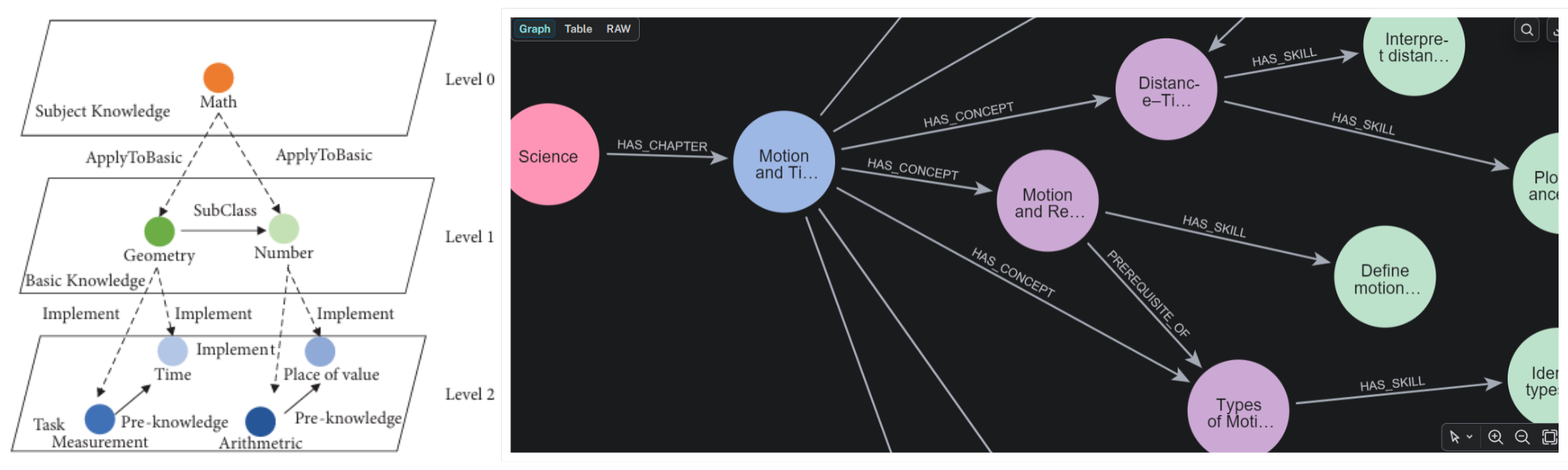
AIRS organizes curriculum knowledge into Knowledge Graphs that reflect how topics and skills relate to each other.
Rather than treating lessons and assessments as isolated activities, the Knowledge Graph allows the platform to understand how concepts connect across chapters, topics, and learning outcomes.
By mapping curriculum content in this way, AIRS can:
This structured representation becomes the foundation for the personalization capabilities built into the AIRS platform.
To personalize learning effectively, AIRS continuously estimates student’s knowledge state — an evolving representation of their understanding across different skills.
Every assessment response contributes a signal about how well a learner understands a particular concept. As students interact with lessons, quizzes, and practice exercises, the system refines its understanding of their strengths and areas that may require further attention.
Over time, this creates a dynamic learning profile that enables the system to adapt learning experiences in meaningful ways.
By combining curriculum intelligence with adaptive tools like Morpheus, AIRS enables several important capabilities:
Learning experiences can be adjusted based on a student’s current progress. Students receive targeted support in areas where they need improvement while continuing to advance in concepts they have already mastered.
Assessments are no longer static snapshots of performance. Instead, they become tools for continuously understanding how students learn and where they may benefit from additional support.
Because the platform understands both curriculum structure and student progress, AIRS can support context-aware learning assistance that aligns explanations, examples, and practice materials with the learner’s current level of understanding.
As educational technology evolves, the ability to understand and respond to individual learning patterns will become increasingly important.
By combining structured curriculum knowledge with adaptive learning tools, AIRS is working toward an educational model where personalization becomes a natural part of the learning process.
In this vision, learning systems do more than deliver content — they actively support each learner’s journey toward mastery.
Machine Intellingence for Human Growth