June 9, 2026
Schools today face a critical imperative to integrate next generation AI labs into their educational frameworks, especially in India where the surge in technological innovation and national initiatives like the National Education Policy 2020 and India AI Talent Mission underscore the urgency. Artificial intelligence has become a defining force across industries and everyday life, making it essential for students to develop practical AI skills, ethical awareness, and innovative problem-solving capabilities to thrive in the future.
Various challenges hamper the effectiveness of traditional education in preparing students for an AI-driven world. Most curricula still prioritize theoretical knowledge and rote memorization, which do not translate well to the hands-on, interdisciplinary demands of AI technologies. Additionally, many schools, particularly in rural or underserved regions, struggle with inadequate digital resources and infrastructure, exacerbating educational disparities. Next generation AI labs address these issues by providing interactive, experiential learning experiences, bridging gaps and engaging learners more deeply.
A fundamental constraint is the lack of personalized learning. Every student’s learning style and pace differ, yet typical classrooms rarely account for these differences, often resulting in disengagement or uneven progress. AI labs employ adaptive learning systems that customize content and pace to each student's needs, making education more inclusive and effective.

Furthermore, educator readiness remains a challenge. Many teachers lack specialized training or accessible tools to meaningfully incorporate AI concepts into their teaching. Modern AI labs help overcome this by automating lesson planning, assessment creation, and performance analytics, thus affording teachers more time to focus on fostering creativity and critical thinking among students.
Ethical AI use and digital literacy are also critical concerns. Without structured guidance, students risk encountering biased or misleading AI applications. Next generation AI labs foreground teaching responsible AI use, promoting ethical awareness and encouraging students to critically assess technology’s impact on society.
Interdisciplinary learning is limited when AI is taught separately from complementary fields like robotics, virtual reality, and data science. Advanced AI labs increasingly provide modular, integrated platforms that blend these domains, encouraging project-based learning that mirrors real-world technological intersections.
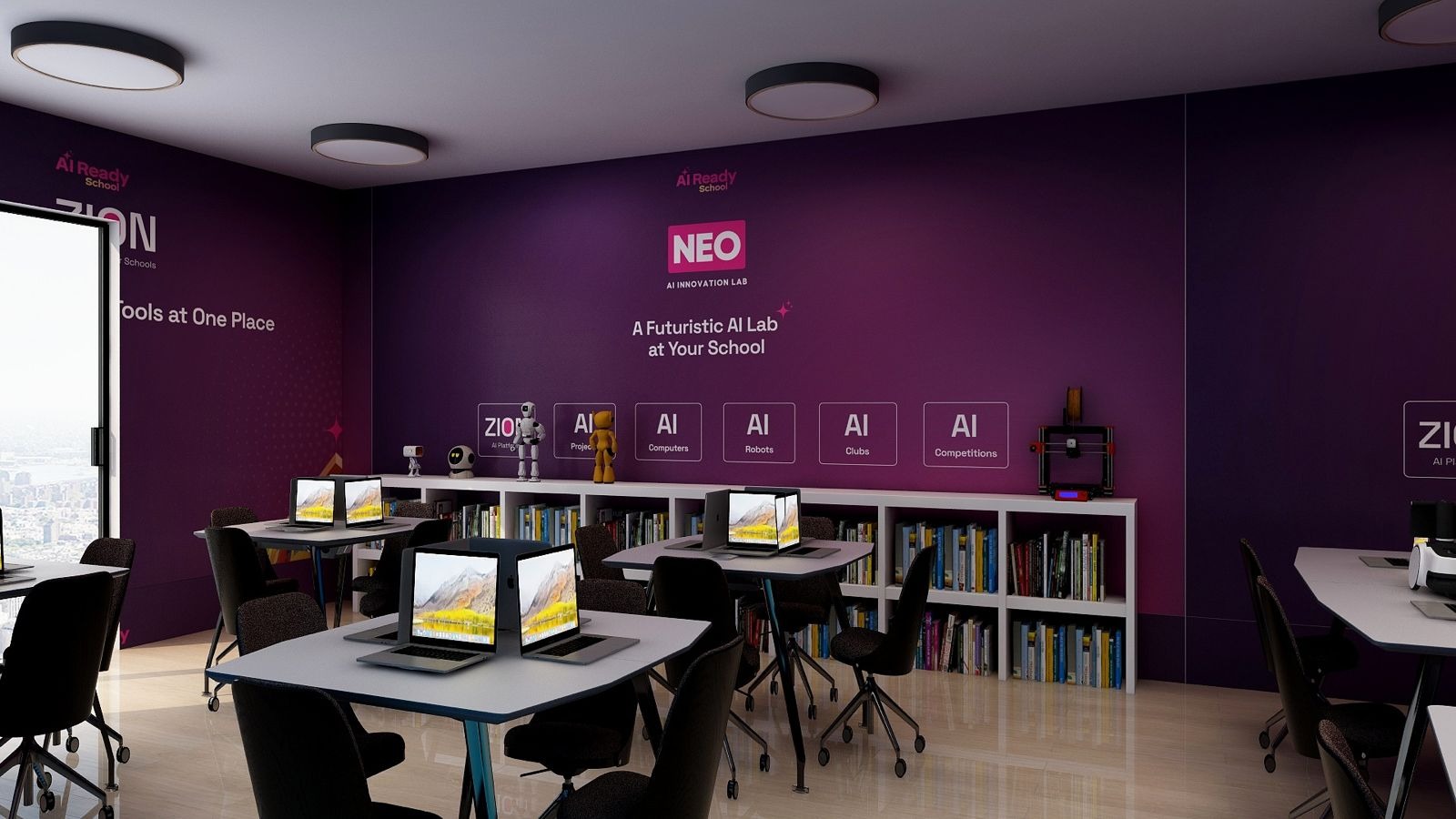
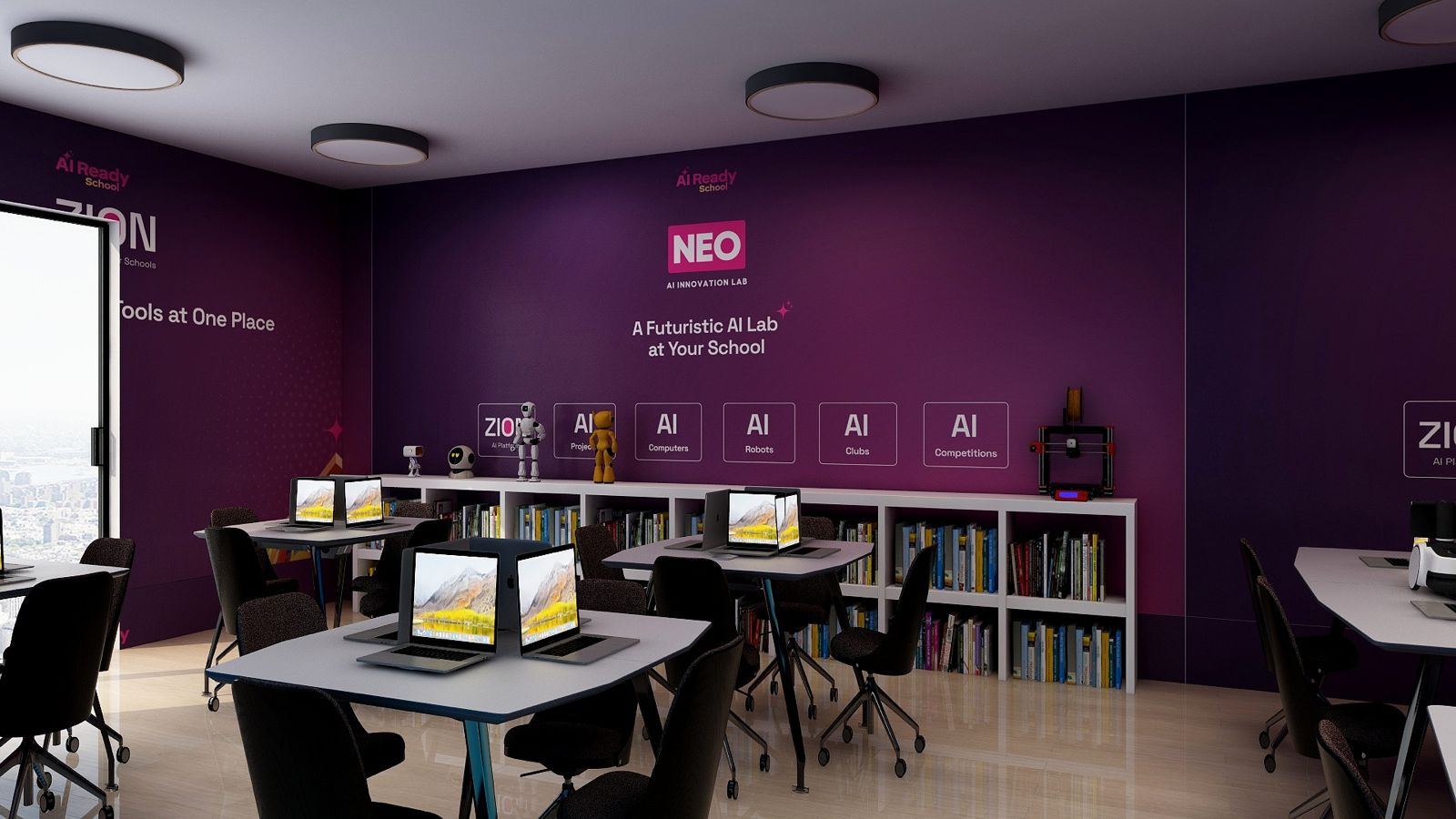
Several initiatives globally and within India exemplify efforts to build next generation AI labs, including the government's Centre of Excellence in AI for Education, CBSE's AI curriculum rollout from Class 3 starting 2026 in partnership with IIT Madras, Mayo College's Applied AI Lab powered by Dataviv, and Google's access to advanced AI tools for 2 million Indian students. While numerous platforms offer AI learning tools, some stand out for their comprehensive, modular, and scalable approaches that balance student creativity, teacher support, ethical focus, and practical application. For instance, the NEO AI Lab by AI Ready School in India offers a wide array of interconnected tools including AI teaching assistants, lesson delivery and assessment generators, coding and project building suite, and creative content creation; a platform—all designed to align with national education objectives and foster hands-on AI literacy. Its integrated ecosystem speaks to an emerging benchmark in AI education, though it is part of a broader movement that includes other innovative educational technology initiatives.
In conclusion, next generation AI labs are essential for transforming education to meet today’s challenges and tomorrow’s opportunities. They enable schools to move beyond outdated methods by providing personalized, ethical, and interdisciplinary AI learning experiences. These labs empower educators and students alike to develop the skills, mindset, and creativity necessary for leadership in an AI-powered future. While many AI education models exist, those with comprehensive and scalable ecosystems like the NEO AI Lab exemplify the kind of innovation needed to truly future-proof schooling in India and beyond.
By embracing such transformative AI labs, schools are not only preparing students to adapt to rapid technological change—they are equipping them to drive that change responsibly and creatively.
Machine Intellingence for Human Growth